EPC in Dorset
ENERGY PERFORMANCE CERTIFICATES (EPC)
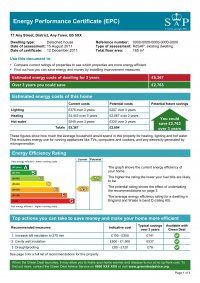
An EPC is a legally required document when offering to
sell or rent a residential property; it has a prescribed format and will
provide an image of the energy efficiency of the property at the time of
the inspection and give a rating, which will enable it to be compared on
a like for like basis with other properties.
Additionally an
Environmental Impact Rating will be provided which will give an
estimated indication of the carbon emissions produced. The certificate
will also provide a series of energy saving improvement measures
indicating the typical savings that could be achieved if the
recommendations were implemented and their effect on the Energy
Efficiency & Environmental Impact Ratings.
Contact us today
if you need an EPC or advice regarding the legislation.
IMPORTANT NEW LEGISLATION
Energy Efficiency in the Private Rental Sector
There are new laws coming into effect from the 1st April 2016, which will affect domestic private landlords?
Key Facts
Tenants’ Energy Efficiency Improvements
What are the reinforcements to tenant rights?
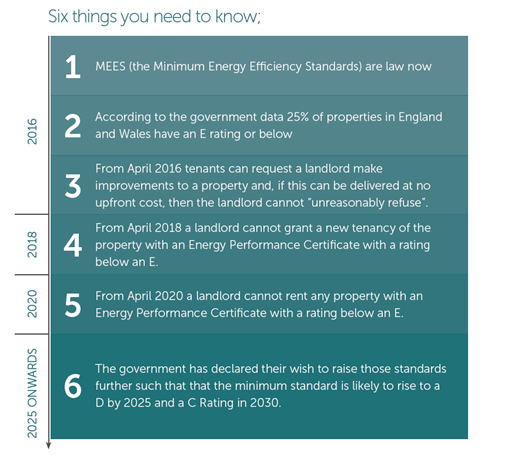
From the 1st April 2016 all domestic tenants have the right to request energy efficiency improvements for the properties they rent.
Can a residential
private landlord refuse a tenants request for Energy Efficiency
Improvements?
Yes. Your tenant must show that
improvements can be installed with no upfront cost to you. Don’t forget
there is likely to be a scheme available, either a development or
replacement for Green Deal, which is intended to facilitate energy
efficiency without the need for upfront costs.
Who does this apply
to?
This new regulation applies to domestic
properties let under a longer term assured and regulated
tenancies.
Are there any
exemptions?
If the building is exempt from an EPC
then you are not required to provide consent. Landlords are also exempt
if required third-party consent, such as planning, for work cannot be
obtained.
Are there any
penalties for non compliance?
Yes. If a tenant
considers that a landlord hasn’t complied with the regulations, they can
take the case to a First-Tier Tribunal General Regulatory Chamber.
Minimum Energy Efficiency Standards (MEES)
What are the Minimum
Energy Efficiency Standards?
From the 1st April
2018 changes to legislation will make it unlawful to let residential
properties with an Energy Performance Certificate (EPC) with a rating of
F or G.
What are the key
dates?
April
2018- the regulations will only apply upon the granting of a
new tenancy to a new or existing tenant.
April 2020- The regulation will
apply to ALL privately rented property which is required to have an
EPC.
Are there any penalties
for non-compliance?
Yes. Failing to comply with a
compliance notice could result in a fine up to £5000.
Why is it being
enforced?
This new legislation attempts to ensure
that all tenants enjoy a right to live in an energy efficient home. It
also contributes to the UK legislative targets of reducing CO2 emissions
for all buildings to around zero by 2050.
Are there any
exemptions?
Yes landlords are exempt if:
- They have carried out all cost-effective energy efficiency improvements.
- Measures Identified by Green Deal or an alternative government scheme are not cost effective.
- If third-party consents are not available (consent from tenants, planning authority etc).
What Next?
Given the risks to landlords it is clear that a full understanding of energy efficiency is required for your property assets, in order to see if you are meeting MEES. We would be happy to meet with you to discuss how this legislation might effect you .
Contact us
Please do not hesitate to get in touch. You can
call or e-mail using the details below:
Mobile: 07889
093936
E-Mail: abenergyassessors@hotmail.com